







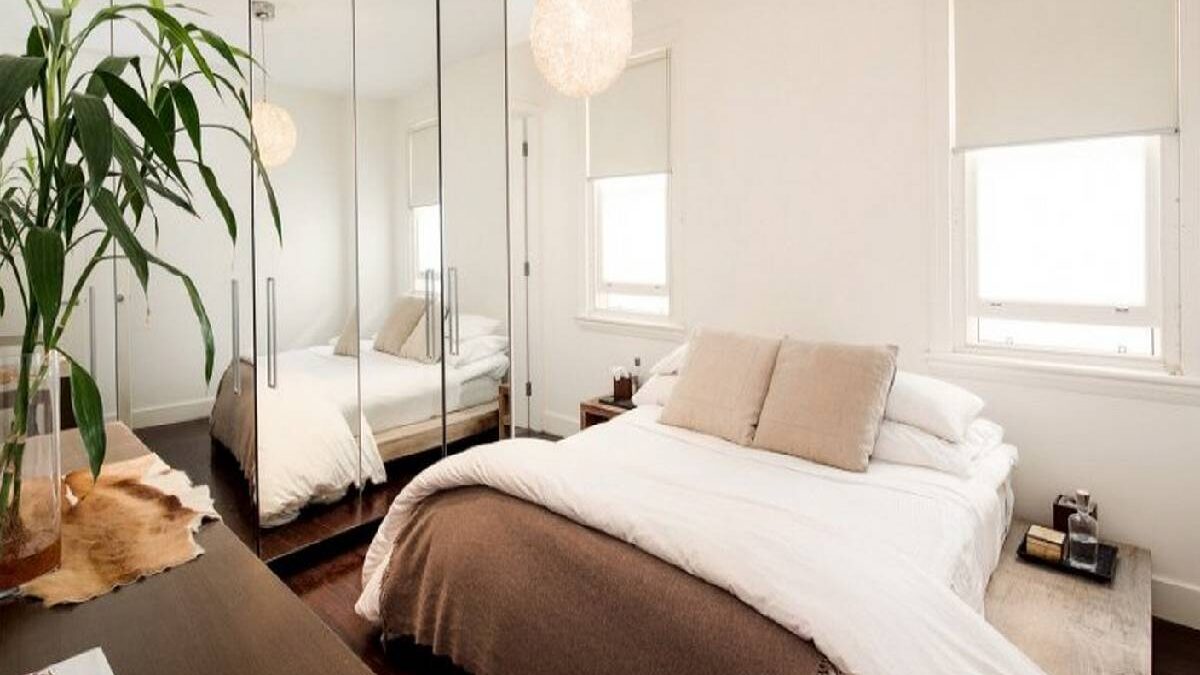

Urban living spaces are rapidly shrinking. In many of our older communities, there are huge old buildings that could easily house four to five families. Unfortunately, these homes may only be inhabited by one or two individuals who spend a lot of money on utilities and maintenance. Owning a McMansion has become a thing of shame, as the cost of living is spiraling out-of-control and incomes are being cut across the board. You may want to renovate and rearrange your living space if you own one. You could create an independent unit to rent out/lease or give your adult children.
If you have just moved or renovated your home and find that your bedroom is smaller than you would like, you don’t need to worry about it. This is a good way to make the most of the limited time available in this pandemic. Why not start a DIY project to create the bedroom of you dreams?
Benefits of smaller spaces
In 1950, the US Census reported that an average US home measured 950 square feet. This figure soared to almost 2400 square feet in 2010. Many people who have large homes today are looking for the benefits of smaller spaces. You can make the most of your large plot by creating a patio, garden or gazebo. The advantages of smaller living areas include:
- Energy efficiency
- Spend less time on cleaning and maintenance
- More information
- Promoting family bonds
- Buy and Decorate Cheaper
There are many ways to make a small space seem bigger. We tend to give priority to the public areas in the house, like the living room and the kitchen, while giving the bedroom a low priority. It’s not very wise to ignore the fact that humans spend almost a third their lives sleeping or resting. It is only logical to give the area we use for sleeping and resting as much attention, if not even more.
How to Make Your Small Bedroom Look Larger
There are many optical illusions that can be used to create the illusion of space.
Low-Level Thinking:
- Avoid furniture and accessories tall enough to take up vertical space.
- Keep the bed at its lowest possible height to maximize vertical space.
- Avoid busy patterns on carpet, parquet or stone.
By keeping the objects at eye level shorter, more wall space is visible. This gives the illusion of more space. This is a practical way to avoid scuffs. Avoid headboards as they can add bulk to your bed.
See through Objects:
Add some transparent or translucent items to the room. For example, shelves, tables, or chairs made of clear materials. It gives the room a feeling of airiness and lightness. You can also see through the objects, which adds visual space.
Color Palette:
It’s become a cliché to say that lighter shades create a sense of space while darker ones reduce it. You don’t have to use dull neutrals or boring shades. Pick a color theme and use different shades in the room. To open up the space, choose a lighter color for the walls and a darker one for the ceiling. The trims and moldings can be in a middle-level tone. Choose a focal point, such as your artwork or drapes, and use one shade.
Placement:
The bed is a very important piece of furniture, but it should also be comfortable and sized to your height and weight. If the bed is uncomfortable and cramped, all the time and effort spent on decorating the bedroom will be wasted. The bed should be placed so that you have enough room to move around on at least three sides. You can move it around until you find the right placement.
Covers should be muted. Avoid prints with busy patterns and bright colors.
As much as you can, keep other items off of the floor. Install wall-mounted lighting and hang nightstands. Make sure that all other furniture has raised legs. This will give the illusion of more space.
Mirrors:
They bring magic and light into the room. Place them strategically so that they reflect as much natural light as possible. Place a mirror next to a window that has a nice view. This will reproduce the scene. Spend money on a large make-up mirror that has lights. Place it in a niche. It is a great way to add interest and light in the room. A large stand-alone wall mirror framed with light wood or painted in the same color as the walls is a wonderful accessory. These mirrors are practical for dressing up to go out and add personality to your room.
Keep it Neat:
This is important in all homes, but it is especially so for small bedrooms. A small room can easily look cluttered. If you have sentimental items, make sure to store them neatly away if you don’t want to see them. Avoid cluttering your walls with artwork. Also, avoid using a post-it or cork board in the bedroom. They are too messy. If possible, install built-in cabinets and shelves.


