
Lead contamination is still a problem in the United States, despite strict federal regulations and efforts to upgrade aging infrastructure. Aquasana’s second annual Water Quality Survey found that lead was the top water contaminant among U.S. adult consumers in 2020. Consumer confidence in the quality of city drinking water is also declining year-over-year.
Aquasana will be participating in National Lead Poisoning Prevention Week, from October 25 to 31, in order to help alleviate concerns. We will share information about lead in water that can raise awareness and empower people in protecting their health and home.
It’s possible that you won’t be able see, smell, or taste lead in your water, but you can still prevent lead poisoning from having negative effects by getting all the facts.
How does lead end up in the water supply of a house?
Lead is a difficult contaminant to eliminate, even though municipalities do their best in the United States to keep drinking water clean and safe. Leaching is a common way for lead to enter the water supply. While the water in your city may be lead-free, it could still become contaminated if it is exposed to plumbing or pipes that contain it on its way to your home.
The aging infrastructure in America is a major cause of leaching problems. Since the use of lead-based pipe in construction was not banned until 1986, there are many homes across the U.S. still using these outdated materials. The possibility of lead contamination in drinking water doesn’t just affect homes built prior to 1986. Even if your home is newer, lead can still make its way into your water supply through old service lines.
What can I do to find out the contents of my water supply?
You can take proactive measures if you’re concerned about the water in your home.
Start by looking at the annual report on water quality in your city. Each city in the U.S. must distribute to its residents a Consumer Confidence Report (also known as a Water Quality Report) before July 1st each year. These reports give detailed information on the quality of drinking water, including any regulated contaminants. These reports can be difficult to understand because they are very technical. You can contact your city if you need more information about your annual report on water quality.
The Environmental Working Group Tap Water Database is another way that you can easily find out what’s in the water of your city. The database, which has been available since 2012, contains water quality data for more than 50,000 municipal water systems in the U.S. Enter your zip code on the website to find out more about the water quality in your city, including lead levels.
If you have a private water source or you want to test your home’s water further, a private laboratory can test a sample for contaminants such as lead. The homeowner will have to pay for this option and wait for results and testing. However, it is a thorough way to determine what’s in the water at your home.
What can I to do keep lead from my water?
Filtering your drinking water is a great way to reduce water concerns, whether you have identified contaminants that may be present in your water supply at home or just want to ensure your peace of mind. Reverse osmosis, and ion-exchange are two of the best filtration techniques for removing lead and other contaminants.
Reverse osmosis, in short, is a process where a liquid is forced to pass through a semiporous membrane. This process removes larger particles than a water-molecule, such as lead, fluoride and arsenic. It also removes mercury, cadmium and asbestos. Ion exchange is more like a magnetic exchange, where the ions are exchanged. This is a water filtering method that uses a potassium-based ion in order to grab and bind to heavy metal contaminants such as lead.
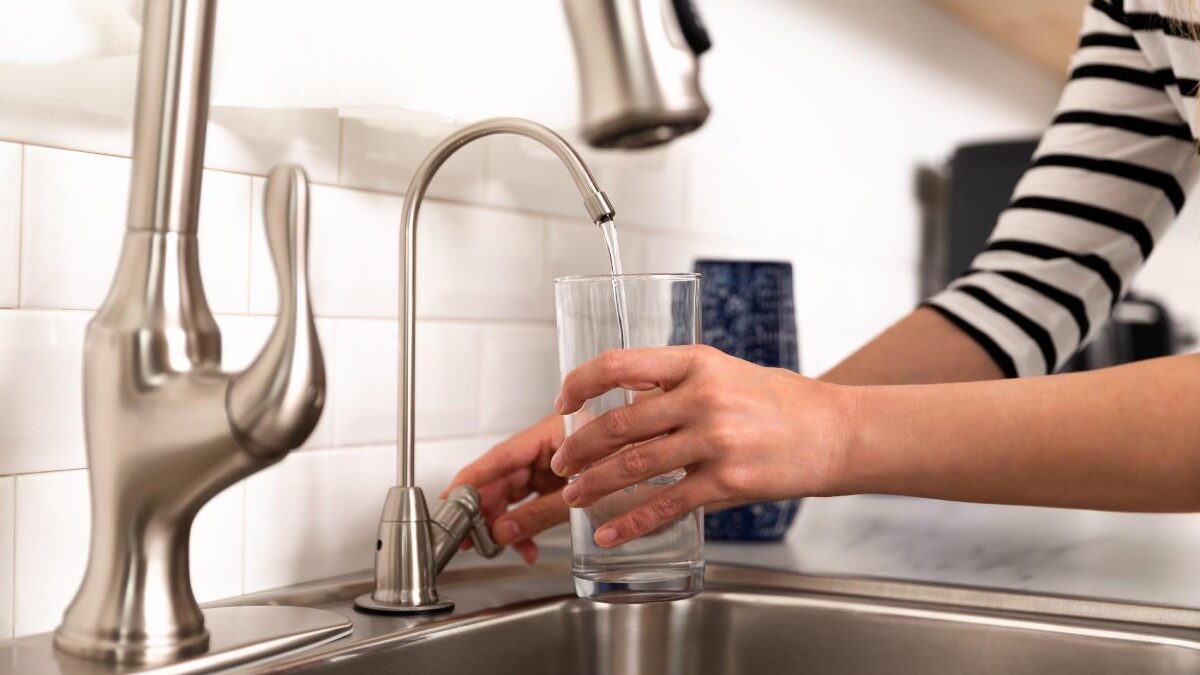
Aquasana offers water filtration systems that use both forms of filtration, and have been certified by a third party for their ability to remove lead. The NSF-Certified Aquasana Reverse Osmosis System, for example, removes up to 99 percent of 88 contaminants, including leaded. This option targets a single source of water within your home, and is usually installed at the kitchen sink.
Our IAPMO-certified OptimH2O whole house water filter uses ion exchange and sub-micron filtering to reduce lead and cysts by more than 99%, and 98% PFOA/PFOS. It also tackles chloramines, chlorine and other contaminants.
Reduce your exposure to lead through drinking water
Aquasana invites you to learn more about lead in drinking waters and how to minimize your exposure during National Lead Poisoning Prevention Week. Education is the first step in reducing your exposure to lead. You can protect yourself and family by understanding how lead might enter your home.
Visit the Aquasana Info Center for more information and educational material.
